Table of Contents
Branches lying around the garden are a problem for every property owner after the tree and shrub pruning season. Improper disposal can result not only in environmental damage but also in severe financial penalties. In this article, we explain exactly where wood waste should go and what options you have for processing it.
Where to throw away branches? Definition and main rules
Branches should be disposed of in brown BIO waste containers (after shredding), handed over to Municipal Selective Waste Collection Points (PSZOK), or given to the municipality during dedicated green waste collections. Sounds simple, doesn’t it? And it is, as long as we remember a few minor rules. First of all, let’s treat these wood remains as a precious raw material, not as unnecessary trash. Branches are 100% biomass that nature can reuse perfectly, turning it into fertile compost or ecological energy.
However, we must be careful not to mix them with other waste, because then the magic of recycling vanishes. It is also worth knowing that burning branches in a bonfire on your own property is prohibited in Poland and may end in a fine, which – let’s face it – would not be the pleasantest ending to garden cleanup. It is better to opt for legal and safe solutions that support our environment. We feel that every such twig landing in the right place is a small step towards a better cycle of matter in our area.

How to prepare branches for collection and why is it important?
Before you throw the branches into the brown bin, grab a pruner or a wood chipper. Why? Most municipalities require green waste to be shredded (often to a length of a few or a dozen centimeters), so that they do not block garbage trucks and turn into “fuel” for the ecosystem faster. If you have a lot of them – for example, after seasonal cutting of fruit trees – the best direction will be the local PSZOK. That is where the wood fraction most often goes, later serving as an aerating structure in industrial composters.
- Shredding: Divide the branches into smaller pieces to facilitate their transport and processing.
- Purity rule: Make sure there are no wires, plastics, or remains of twine in the branches.
- Alternative: If you have space, create your own composter – it’s free fertilizer that your plants will love!
By the way, did you know that proper management of such waste is strictly regulated? According to the website gdzie-wyrzucic.org.pl, branches are classified as green waste, which excludes them from being stored in mixed waste containers. Seriously, sticking to these guidelines is the easiest way to be eco without unnecessary effort. I think everyone likes it when the rules are clear and the garden looks blooming as a result!
Why is proper disposal of branches important?
Cleaning up the garden after the season is a moment of peace for many of us, but also a major logistical challenge. When we look at a large pile of branches after pruning apple trees or shaping a hedge, the first thought is often to light a fire. However, it is worth knowing that what used to be a rural tradition today not only harms the planet but can also hit our pockets hard. Proper management of such remains is primarily a benefit for our land – literally!
Instead of treating branches like troublesome trash, let’s try to look at them as a valuable raw material. We feel that implementing good segregation habits makes working in the garden more satisfying. Seriously, the knowledge that we are not wasting the potential dormant in wood is a lot of fun. By the way, a clean garden without lingering piles is not only about aesthetics but also health for the other plants, which gain more light and a lower risk of developing unwanted fungi.
Compliance with regulations and the second life of wood
Caring for the ecosystem starts right at our doorstep, and conscious segregation of green waste is the simplest step we can take. Why is it so important? Here are the main advantages of sticking to the rules:
- Financial security – we avoid unpleasant visits from municipal services and high fines (which can reach up to several thousand PLN), because the law prohibits burning biomass on your own.
- Powering the home ecosystem – branches processed in a wood chipper turn into phenomenal mulch, which retains moisture in the soil and limits weed growth.
- Production of free fertilizer – after shredding, the woody parts are a great addition to the composter, enriching it with carbon, which according to experts allows for an approx. 20% richer humus structure.
- Protection of clean air – by giving up the bonfire, we do not emit harmful suspended dust in the immediate vicinity, which is crucial for our health and that of our neighbors.
If we do not have space for our own composter, the best solution is to hand over the branches to the local Municipal Selective Waste Collection Point. It is worth remembering that every municipality has its own guidelines, and organizations bringing together European local governments (CEMR) promote just such an approach, emphasizing the role of the circular economy in our local communities. Thanks to this, we are sure that our garden “waste” will be professionally processed into biomass or industrial compost, instead of simply disappearing in smoke.
Key ways to get rid of branches
Did you manage to tidy up the garden, but now you’re looking at piles of branches and wondering what to do with them? Don’t worry, we have proven methods for that! Getting rid of green waste doesn’t have to be burdensome, and more importantly – it can take place in full harmony with nature. Let’s remember that dumping them in the forest or burning them is a bad idea that harms the environment (and the wallet, as fines apply). Instead, we have a choice of several civilized and quite pleasant solutions.
The choice of method depends mainly on how much wood is lying on your lawn. If it’s just a few pruned rose shoots, a regular BIO container is enough. However, if you’ve done a solid felling, it’s worth considering slightly heavier equipment or the help of specialists. Seriously, there are more options than you think:
- Handing over to PSZOK – The Municipal Selective Waste Collection Point is a place where you can personally bring your branches. This often requires prior notification, but it’s a sure way for legal disposal.
- Leaving outside the premises – on specific dates, municipalities collect green waste directly from the gate. Just cut them into smaller pieces and you’re done!
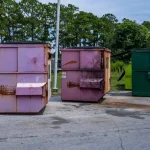
- Professional services (Big Bag or container) – in the event of a real “branch apocalypse,” you order a dedicated container and the problem disappears from your head in a few moments.
- Home recycling – shredding wood with a wood chipper and throwing it into a composter is our favorite, most eco-friendly solution.
Rules for handing over branches to PSZOK
The logistics of transporting branches to a collection point requires a moment of planning, but it can be handled without a headache. First and foremost, let’s remember about segregation – branches are green waste and cannot be mixed with cans or rubble. Many municipalities also have quite specific technical requirements. It often happens that municipal collection points do not accept whole boughs, so before transport, it’s worth cutting them into smaller parts (usually up to 1 meter in length) or tying them into convenient bundles.
Before you pack your car to the roof, check the quantity limits on your local office’s website. Nobody likes to be turned away empty-handed, right? Usually, handing over branches is free for residents, but some PSZOKs introduce volume restrictions per single transport or year. It’s also important that the wood is “clean” – without soil, wires, or remains of Christmas decorations. Segregation is the basis for the recycling process to run at full speed!
Using wood chippers and composters
We feel that having your own composter is the absolute king of garden order. It’s not just a saving, but also an amazing satisfaction from creating your own black gold for plants. However, so that thicker branches do not decompose for years, they need a little help – this is where wood chippers step in. Shredded chips take up even 8 times less space than a pile of branches! Material prepared this way quickly turns into valuable humus.
By the way, wood chips are great mulch. Scattered under bushes, they retain moisture in the soil and limit weeds, while looking very aesthetic. We can also leave some small sticks in a corner of the garden as a shelter for beneficial insects – nature will surely repay us. This is definitely the cheapest option, because the only cost is the purchase or rental of the machine, and we gain free fertilizer and a well-kept garden.
Examples of disposal in practice
You’re probably wondering whether it’s better to “produce” your own gardeners’ gold or just get rid of the problem in one go? It all depends on how much waste you actually have. If you only collect a few bags of grass from your garden, then a huge container will look at least strange at your place. On the other hand, trying to stuff a cut hedge into a small composter is a simple recipe for frustration. Seriously, size matters here!
We believe that every method is good as long as it’s legal and ecological. Choosing the right path is not only a matter of convenience but also a significant saving – of both time and money. Take a look at our comparison to quickly evaluate what will be most profitable for you now.
| Disposal Method | Processing Time | Estimated Cost | Workload |
|---|---|---|---|
| Home composter | Continuous (maturation 6-12 months) | Low (only purchase/construction cost) | Medium (requires mixing) |
| Delivery to PSZOK | A few hours (own transport) | Free (within the garbage fee) | High (packing and loading) |
| Commercial removal | Instant (container delivery) | High (service fee) | Low (full convenience) |
Match the method to the scale of your challenges
If you have a small, cozy garden, a home composter is an absolute bullseye. It’s a bit like magic – you throw in peelings and grass, and after a while, you take out the healthiest fertilizer in the world. By the way, composting allows you to reduce the amount of waste in a household by even 30–40%, which is confirmed by data published by the TopFlop portal based on GUS statistics. All you need is a piece of shade, four pallet walls, and a bit of patience. It’s a great feeling when nothing goes to waste!
And what if you’re making a total revolution on the plot? Clearing old trees, removing running meters of a hedge, or cleaning up after a large gale is already a higher level. In such a scenario, there’s no point in struggling with a wheelbarrow. Renting a container is then a salvation. You order, throw everything in “as it goes” (well, almost everything, as long as it’s without tires and paints!) and forget about the matter. The company takes the problem off your hands, and you can calmly sit down with a coffee in a clean garden. I think each of us likes such quick results, right?
Frequently Asked Questions (FAQ)
What is the difference between branches and BIO waste in a brown container?
The difference lies primarily in the form and method of material preparation. Although branches are classified as green waste, they cannot go into the brown bin in any form. Most municipalities impose strict limits on their size – usually, only cut pieces 30 to 50 cm long are allowed. If you plan to get rid of a larger amount of thick branches, it may be necessary to shred them in a wood chipper first or order a dedicated container.
Who most often uses container branch removal services?
This service is primarily dedicated to people who generate a large amount of wood waste that cannot be disposed of in standard bio containers. It is most often used by:
- Owners of large plots and gardens after intensive seasonal work.
- Housing associations taking care of green areas around apartment blocks.
- People carrying out a total felling of old fruit trees or conifers.
Can you burn branches on your own plot?
According to current regulations, burning branches on your own property is prohibited. Municipal cleanliness and order regulations clearly state that if the municipality provides a green waste collection system or runs a PSZOK point, burning biomass in the garden is illegal. Violating these rules may result in a fine; therefore, the safest and most ecological solution is to hand over branches for professional disposal.