Table of Contents
When renovating a bathroom, a common dilemma arises: where to dispose of an old bathroom faucet? Although it seems like just a piece of metal, improper disposal can lead to serious ecological and financial consequences. In this article, we explain how to legally and safely dispose of faucets and other sanitary fittings.
Where to dispose of a bathroom faucet? Definition and main rules
Bathroom and kitchen faucets should be taken to a Municipal Selective Waste Collection Point (PSZOK) or sold at a scrap metal yard. Sanitary fittings are recyclable due to their content of non-ferrous metals such as brass, copper, and chrome. Seriously, under no circumstances should you throw an old faucet into the black mixed waste bin! Although we associate metal with the yellow recycling bag, most municipal regulations prohibit placing heavy fittings there. Why? Because it’s simply too valuable a raw material to be lost in a sorting facility.
We feel that replacing a faucet is the perfect moment for a small gesture for the planet. Instead of stuffing it into a bin near your apartment block, it’s better to drive to the PSZOK. Just remember to bring your ID – staff often check if you actually live in the given municipality and pay for waste disposal. If you have several such pieces in your garage, a scrap yard might be an even better idea. Instead of a fine (which according to the Frapeti.pl portal can be quite painful for the wallet), you’ll get a few dollars for coffee. Brass is in high demand!

Electronics or just metal? It makes a difference
The situation gets a bit more complicated when your faucet isn’t just a simple lever, but a device packed with technology. If the faucet has a photocell, a thermostat requiring power, or an LED display, its legal status changes. According to guidelines from the Hkk.info.pl service and the Act on Waste Electrical and Electronic Equipment (WEEE), such fittings become e-waste. Treat it like an old mixer or phone. You can leave it at the PSZOK in the “electro” section, and if you’re buying a new one, stores with an area over 400 m² are required to accept the old model without blinking an eye.
- Standard models: Devoid of cables and sensors. We dispose of them as scrap metal (ideally after unscrewing flexible hoses).
- Electronic models: All with infrared or touch sensors. These are officially WEEE – they require a special disposal path so that toxic components do not end up in the soil.
- Logistics: Before transport, empty any leftover water from the faucet. No one likes having a wet trunk, right?
By the way, the WWF foundation often reminds us that recovering metals from such items is a huge energy saving compared to mining new ores. A small thing, but it makes a difference! Before you head out, though, check your municipality’s website – some points have weight limits on fittings accepted free of charge on the spot.
Why is proper disposal of fittings crucial?
Bathroom renovations can be exciting, but an old faucet or showerhead is more than just a “piece of scrap” to be thrown away. We feel that people often forget what hides beneath the shiny chrome plating. Seriously, throwing fittings into a regular mixed waste bin is the worst-case scenario – and not just for the planet, but for our wallets too. Old faucets often contain brass with additives that should not wander around random landfills.
The threat is quite real. When such items end up in the forest or at illegal dump sites, heavy metals like lead begin their slow journey into the groundwater. According to data from the OMEP Foundation, small amounts of hazardous substances can contaminate hundreds of liters of water. Is it worth risking the health of neighbors and local nature to save fifteen minutes driving to a collection point? Probably not.
Ecological and financial consequences of wrong decisions
Properly disposing of renovation waste isn’t just about being “eco”; it’s simply common sense and taking care of your own finances. Polish law is increasingly strict with those who mistake the forest or a residential bin for a professional recycling point. According to current regulations, such as the Act on Batteries and Accumulators, improper waste management can cost us dearly.
Here are the main reasons why it’s worth sticking to the rules:
- Soil contamination: Lead and other metals from fittings and batteries penetrate the earth, destroying microorganisms and poisoning vegetation.
- Threat to water: Leaking substances reach groundwater, which directly hits our drinking water sources.
- High financial penalties: For illegal disposal of bulky or renovation waste, fines start from 500 PLN, but in more serious cases, administrative penalties can reach up to 10,000 PLN.
- Waste of raw materials: Fittings are a great source of brass and copper – by taking them to PSZOK, we give metals a second life.
By the way, did you know that reports from the Chief Inspectorate for Environmental Protection have been sounding the alarm for years about low recovery levels for certain waste? It’s a sad fact, but we can easily change it. Instead of risking a fine that could equal the cost of a new, luxury bath faucet, it’s better to choose legal recycling. It simply pays off!
5 ways to legally dispose of an old faucet
Have an old bathroom or kitchen faucet at home and don’t know what to do with it? Don’t worry, we have several proven and completely legal solutions. It’s worth taking care of, because according to the Chief Inspectorate for Environmental Protection, proper disposal of metal elements allows for the recovery of precious raw materials and protects our water from pollution. Seriously, it’s simpler than it sounds! Forget about leaving junk near the bin – it not only looks bad but can also end in a fine. Instead, choose one of the following paths that are friendly to the planet and your wallet.
- PSZOK, or your best friend – The Municipal Selective Waste Collection Point is a place everyone has in their municipality. You can take your old faucet there completely free of charge. This is probably the most reliable method to have a clear conscience.
- Scrap yard – If your faucet is heavy (e.g., made of brass), you can even make money on it! Brass is highly valued in recycling. A few dollars will end up in your pocket, and the metal will return to circulation – a win-win.
- Exchange at the retailer (1 for 1) – Buying a new faucet at a hardware store? Stores are required to accept old equipment if you buy a new equivalent from them. It’s a super convenient solution because you handle everything in one go.
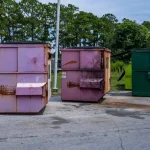
- Post-renovation waste container – Doing a major demolition and renting a dumpster for rubble and mixed waste? Old fittings can go there along with other installation elements. This is a great option for large projects.
- Donation – If the faucet is in good condition and you’re only replacing it for aesthetic reasons, consider giving it to a local foundation or posting it on a “Freecycle” type group. Someone might still need it, and giving a second life to objects is awesome!
Preparing the faucet for recycling
Before heading to the collection point, take a look at your faucet. Although the faucet body is usually solid metal, it’s worth spending a moment on minor disassembly. We feel that few people remember this, and it really makes the work easier for waste processing plants. If you’re planning a visit to the scrap yard, the guys on-site will surely appreciate it when you unscrew plastic aerators or rubber seals. Pure metal has a higher value, so maybe you’ll get a slightly better price for it?
In the case of thermostatic faucets or those with built-in batteries (e.g., touchless), the matter is a bit more serious. According to guidelines from experts at the WebCompany portal, devices containing cells require special caution. Before taking them to PSZOK, it’s worth covering the contacts with electrical tape to avoid an accidental short circuit. A short moment with tape in hand secures the entire transport process and makes recycling fully safe for everyone involved. Simple, right?
Material composition of fittings and recycling
Have you ever wondered what exactly lies inside your washbasin faucet? It’s not just a nice, shiny object, but a real mine of raw materials. When a faucet ends its service, it doesn’t have to end up in a landfill as useless junk. Quite the opposite! Most of the elements that make up fittings are materials with fantastic potential for reuse. According to data shared by the Kuchinox portal, brass makes up the lion’s share of the mass of a typical faucet. Because metals can be processed almost infinitely, your old faucet might one day return to circulation as, for example, a part of a ship engine or a new bolt.
Sorting all these small things – from the metal body to the plastic rings – is a great way to contribute at home to a circular economy. Seriously! By recovering these raw materials, we save a lot of energy that smelters would need to mine and process completely new metal ores. Just a glance at the table below shows what we are dealing with during disassembly. Surely no one likes wasting good things, right?
| Faucet Element | Main Material | Recovery Capability / Purpose |
|---|---|---|
| Body and spout | Brass (copper and zinc) | Very high (approx. 80%). Raw material for new metal alloys. |
| Connection hoses | Stainless steel / Rubber | Recovery of steel for production of pipes or tools. |
| Control cartridge | Ceramic / Plastic | Recycling into construction aggregate or industrial sand. |
| Aerator and seals | Plastic (PE, PP) / Rubber | Processed into granules for the production of new packaging or insulation. |
| Handle (lever) | Zamak (zinc and aluminum) or steel | Full metallurgical recycling. |
Why is it worth taking a faucet to PSZOK?
We feel that we often forget one important thing: all these metals and plastics have real value. Reports prepared by the Central Statistical Office (GUS) clearly show that the recycling of non-ferrous metals, such as the copper contained in brass, is one of the most effective recovery processes in our country. Specialists can extract up to 800 kilograms of pure brass from one ton of used fittings! That’s impressive, isn’t it? So instead of throwing an old faucet into a regular bin (which, by the way, is not allowed), it’s better to drive to the nearest PSZOK. There, the brass, steel, and plastics will be professionally separated.
Even the less “noble” parts, like ceramic plates from cartridges or rubber seals, find a second life. As WWF Poland states in the context of waste management, ceramics can be crushed and used as a stable substrate in construction. Every small element matters. By sorting fittings, we signal to manufacturers that we care about wise resource management. After all, no one wants such valuable raw materials to simply rust somewhere in the ground when they can be reused to create something new and useful.
Frequently Asked Questions (FAQ)
Can a bathroom faucet be thrown into the plastic and metal (yellow bag)?
In most cases, this is not the right place. Although the faucet consists of metal, yellow bags in the segregation system are mainly intended for packaging waste, not for home furnishings or renovation waste. The most sensible and safest solution is to deliver old fittings to a Municipal Selective Waste Collection Point (PSZOK). Before disposing, however, it is worth checking local municipal regulations, as rules for metal segregation may vary by region.
What is the difference between disposing of a faucet and an electric battery?
Despite the similar name (in some languages), these are two completely different types of waste that should not be confused:
- Faucet: This is primarily scrap metal, suitable for melting down and reuse in metallurgy.
- Electric battery (AA/rechargeable): This is hazardous waste. It contains chemical substances and electrolytes that pose a threat to the environment, so it requires specialized disposal in dedicated containers.
How much does it cost to take a faucet to PSZOK?
Taking a used bathroom faucet to PSZOK is completely free for residents. This service is already funded as part of the municipal waste management fee you pay to your municipality every month. Just deliver the fittings to the point and confirm your place of residence.