Table of Contents
In an era of growing ecological awareness and tightening waste management regulations, understanding the difference between key concepts is becoming essential. Although we often use the terms recovery and recycling interchangeably, in the light of law and technology, they represent separate categories of actions. In this article, we will explain exactly what waste recovery is, how Polish law classifies it, and what processes make up this broad definition.
What is waste recovery? Definition
Let’s start with specifics, because many complicated terms have grown around this topic, yet the matter is fundamentally very positive. Waste recovery is a process whose main result is that waste serves a useful purpose by replacing other materials that would otherwise have been used to fulfill a given function. Simply put: instead of reaching for new raw materials from nature, we extract what is valuable from what we have already produced. According to data from the Central Statistical Office (GUS) and the provisions of the 2012 Waste Act, this entire process must be carried out safely – without generating risks to human life and health and without wreaking havoc on the ecosystem.
We feel that recovery is like a second chance for items we hastily deemed unnecessary. It’s not just about “doing something” with trash, but about realistically relieving the planet. Seriously, every ton of recovered materials means a smaller hole in the ground from aggregate mining or fewer trees cut down. It’s a bit like modern alchemy, except instead of gold, we recover real resources that remain in the economic cycle.

What does recovery look like in practice?
It’s worth remembering that recovery is a much broader concept than recycling itself (which is just one of its forms!). In Polish law, based on EU directives, these processes are classified using codes from R1 to R13. Does that sound boring? Maybe a little, but super interesting things are hidden behind these symbols! For example, code R1 is energy recovery, which is a situation where waste that can no longer be processed into a new product goes to professional installations and turns into heat in our radiators or electricity in our sockets.
Here is what most often happens to waste as part of recovery:
- Recycling: Processing paper, glass, or plastic into new packaging (this is our absolute favorite!).
- Energy recovery: Incineration of the combustible fraction under safe conditions with heat recovery.
- Regeneration: Cleaning and restoring properties to, for example, lubricating oils so they can work in engines again.
- Composting: Specifically the biological recovery of green waste, which creates fertile soil.
By the way, the statistics are optimistic. Reports published by the Central Statistical Office show that in Poland in 2022, as much as 74% of municipal waste went to recovery or recycling processes. We seem to be heading in the right direction, don’t we? Of course, there is always room for improvement, but such numbers show that the segregation system, though sometimes tiring, simply works and makes sense.
Recovery vs. Recycling – Know the Differences
We often throw these two words into one bag, but – between us – that’s a significant substantive error. Imagine the relationship between a square and a rectangle. Every square is a rectangle, right? With waste, it’s almost identical: every recycling process is a form of recovery, but not every recovery process can be called recycling. Recovery is simply a huge “umbrella” under which various techniques for saving raw materials and energy from being wasted in a landfill are hidden.
Actually, understanding this hierarchy is a great first step toward being a more conscious consumer. Instead of focusing only on whether a plastic bottle will become a bottle again, we look more broadly at how best to use what we have already produced. We feel that once you grasp this difference, sorting in the kitchen will somehow become… more logical. Look at the comparison below to organize this knowledge once and for all.
| Feature | Recovery (Parent Category) | Recycling (Subset of Recovery) |
|---|---|---|
| Main Goal | Replacing primary raw materials with waste. | Recovering a specific material for reuse. |
| Form | Materials, energy (heat), fuels. | Exclusively raw materials (paper, glass, metal). |
| Example | Burning waste to heat homes. | Processing old newspapers into a new notebook. |
Energy recovery
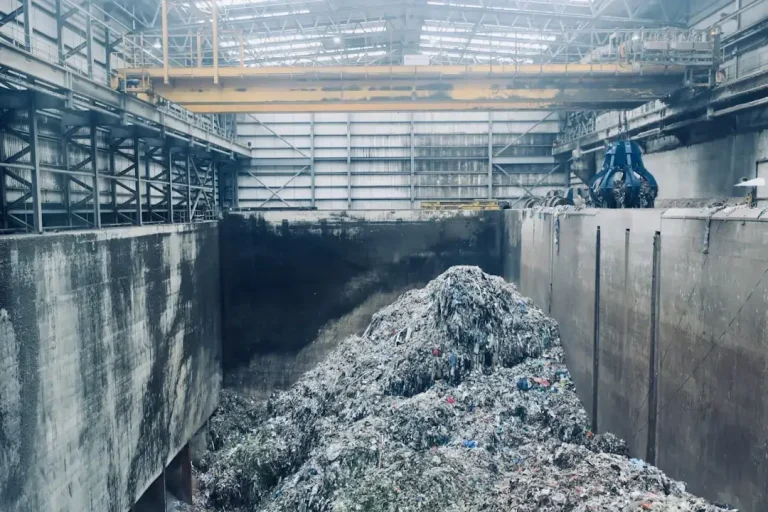
What to do with waste that – despite sincere intentions – cannot be converted into anything new? This is where energy recovery enters the stage. It is a process in which trash becomes fuel. Instead of lying in the ground for hundreds of years, it goes to specialized facilities where, through incineration, it generates heat or electricity. Seriously, your old slippers can, in a sense, help heat a nearby housing estate!
The most interesting example is the production of biogas or alternative fuels (RDF), which are often mentioned in environmental reports. According to what WWF Poland promotes in the context of the circular economy, thermal waste transformation is a last resort, but still better than landfilling. It’s a clever way to close the system where traditional methods fail. Surely no one likes wasting potential, even if it lies in ordinary trash?
Material recycling
This is our absolute favorite and the most well-known process. Material recycling focuses on extracting a pure substance from waste. An aluminum can returns as another can, and a glass juice bottle can be processed an infinite number of times without losing quality. This is where the greatest “magic” of saving natural resources happens.
Experts from the Institute of Waste Management emphasize that the key here is the purity of the fraction. The better we separate plastic from food scraps, the greater the chance that the material will gain a second life in the form of a new fleece sweatshirt or a window frame. This is not just a empty slogan – it’s a real relief for the planet, because production from secondary raw materials usually consumes much less electricity and water than starting from scratch. Simple, logical, and just cool, right?
Key Recovery Processes (R1-R13)
Have you ever wondered what happens to waste when it disappears from our backyards? In the world of a circular economy, nothing is lost, only its form changes. The legal framework for this commotion is defined by recovery processes from R1 to R13. It’s like a “cheat sheet” for the industry, suggesting how to squeeze the best out of raw materials. We feel that understanding these symbols allows you to look at sorting trash as saving valuable resources, not just a chore. Seriously, every ton of recovered material is a specific gain for the planet!
In Poland, according to GUS data, we are doing better and better, although we still have a bit to go to catch up with European leaders. The most important thing is that recovery is not just turning bottles into sweatshirts. It also involves complex chemical and thermal operations that allow us, for example, to heat homes with energy from waste (process R1), which already applies to about 16% of our municipal trash. Below we have prepared a summary of the most important processes that actually change our environment.

Overview of the Most Important Recovery Categories
Instead of boring definitions, we have prepared a list of specifics. See what lies behind these technical codes:
- R1 – Use as fuel: We turn high-calorific waste into energy. This is where the RDF fraction goes, powering cement plants and heat and power plants.
- R2 – Solvent regeneration: Chemical magic in practice. The pharmaceutical industry can recover acetone or gasoline, reducing the consumption of new raw materials by up to 30%. Heard of the German UBA? They calculated that this way we save a mass of resources in the industrial sector.
- R3 – Recycling of organic substances: Our daily classic, including paper, cardboard, and textiles. WWF’s Canopy campaign reminds us that a ton of recycled paper means 2.5 tons less CO₂ in the atmosphere! By the way, we also count composting in this group.
- R4 – Metal recycling: From cans to aluminum from heavy structures. In the EU, we recover as much as 95% of steel; in Poland, the result oscillates around 70% (Eurostat data). This is likely one of the most profitable processes.
- R5 – Recycling of inorganic materials: Glass and concrete rule here. Although we are only just experimenting with concrete in Poland, glassworks are already masters at reusing cullet.
- R6 and R7 – Acid regeneration and recovery of reducing components: This is advanced stuff, often found in plants like Polfa Warsaw or in the metallurgical industry. It allows for the recovery of valuable catalysts and acids (e.g., hydrochloric or sulfuric), which drastically lowers factory emissions.
Is that all? Of course not! The full list also includes processes such as oil refining (R9) or land treatment resulting in ecological benefit (R10). All these actions are tied together by certificates such as FSC for wood or OEKO-TEX for textiles, which guarantee that the process was safe for us and the environment. It looks like the system works quite efficiently, doesn’t it?
Why is waste recovery important?
We often think of recovery as a chore of sorting under the sink, but it is actually the real engine of a modern economy. The transition to the Circular Economy (CE) model is not just a fashion, but a real strategy that allows us to close the material loop. Instead of extracting, processing, and discarding, we simply keep raw materials in the game. Take a look at the Circularity Gap Report 2020 prepared by the EEA – the numbers are impressive. It turns out that a full circular transformation could reduce global greenhouse gas emissions by up to 39%. Seriously, that’s almost half the success in the fight for a stable climate, and it all starts with what we do with “unnecessary” aluminum or paper.
For businesses, recovery is a solid foundation of ESG strategy. Investing in secondary raw materials not only improves brand image but primarily secures supply chains against price fluctuations on global markets. Surely no one likes sudden increases in production costs, right? Using recycled metals or plastics allows for real independence from the import of primary raw materials, which in today’s geopolitical reality is worth its weight in gold. WWF Poland correctly notes in its campaigns that secondary raw materials are simply new business opportunities, not a burdensome waste.

How does recovery protect the planet’s natural resources?
We have the impression that the Earth’s resources are inexhaustible, but Global Footprint Network data quickly brings us down to earth. Currently, humanity consumes resources at a rate as if we had 1.75 planets at our disposal. It’s a bit like living on an overdraft that cannot be paid back. Waste recovery is the best “recovery program” here. Extracting lithium or cobalt from used batteries (WEEE) drastically reduces the need to build new mines that devastate local ecosystems. Moreover, steel recycling saves about 1.5 tons of CO₂ for every ton of raw material compared to primary production. Doesn’t that sound like a net gain?
- Pollution reduction: Less waste in landfills means less methane and toxic leaks into the soil.
- Energy savings: Recovering metals from e-waste can consume up to 90% less energy than traditional mining.
- Resource security: Thanks to recovery, we keep critical metals necessary for modern technology production in Europe.
- Toxin elimination: A professional recovery process allows for the safe removal of harmful substances before re-introducing the material into circulation, as confirmed by standards such as OEKO-TEX® or FSC certifications.
By the way, did you know that the European Commission estimates the creation of up to 700,000 new jobs in the circular economy sector alone by 2030? Recovery is therefore not only about protecting nature but also a solid boost for the economy. Instead of worrying about depleted deposits, we have simply learned to see value in what we previously considered trash.
Frequently Asked Questions (FAQ)
What is the main difference between recovery and recycling?
The key difference lies in the scope of both terms. Recovery is a broader parent term that includes all activities involving the use of waste – including processes such as incineration with thermal energy recovery. Recycling, on the other hand, is a specific form of recovery, focused exclusively on reprocessing raw materials to produce new products or materials.
Who is responsible for the classification of recovery processes?
In the Polish legal system, the Central Statistical Office (GUS) and the Ministry of Climate and Environment are responsible for the definitions and precise classification of recovery processes. These guidelines are established based on the current Waste Act, which is the foundation of the circular economy.
What is the opposite of waste recovery?
The opposite of recovery is waste disposal. An example of such an action is landfilling without any attempt to recover energy or raw materials. In the waste management hierarchy, disposal is considered the least desirable and final solution, which should be prevented through effective recycling and recovery.