
Table of Contents
In today’s world, the concept of ‘eco’ is declined in all cases, yet it is not always associated with concrete knowledge. Being eco in the simplest terms means living in a sustainable way that minimizes humanity’s negative impact on the planet and natural resources. In this article, you will learn what an ecological lifestyle is exactly and how you can implement it into your daily habits.
Definition of the Term: What Exactly Does It Mean to ‘Be Eco’?
“Being eco” means making daily decisions that reduce humanity’s negative impact on the environment and support the responsible use of natural resources. It is a simple approach to life where our planet ceases to be just a warehouse of raw materials and becomes a true, shared home.
The word itself has wonderful roots anyway! According to the PWN Polish Language Dictionary, the prefix “eco-” comes from the Greek oikos, which simply means home or surroundings. In turn, ecology as a science developed thanks to researchers such as Ernst Haeckel. Seriously, isn’t it fascinating that by taking care of the planet, we are returning to the roots of the word “home”? We have the impression that today’s “being eco” is often associated with expensive gadgets, yet it is about something completely different. It is simply mindfulness towards what surrounds us.

From Fleeting Trend to Daily Responsibility
Are you wondering if ecology is just another marketing gimmick? Sure, it’s easy to get that impression when green labels with the word “bio” look at us from every side. However, nature conservation movements, including the historical actions of well-known organizations such as Greenpeace or WWF, have been fighting real problems for decades. International reports leave no illusions – just look at the climate change data published by IPCC or the statistics regarding shrinking wild animal populations in the latest Living Planet Report from WWF. There is no room for fiction here.
Modern “being eco” is primarily about concrete habits that are easy to implement without revolutionizing your entire life. Reducing plastic – whose production is growing at an alarming rate, monitored by the OECD, among others – wise energy management, or reliably checking certificates such as the EU Ecolabel, FSC, or OEKO-TEX is our everyday reality. We don’t have to be perfect right away. Every small change counts, because after all, we only have one home!
Why Does an Ecological Lifestyle Matter?
Do you sometimes have the feeling that our daily choices are just a drop in the ocean of needs? Seriously, it’s easy to fall into that trap of thinking. And yet, as analyses published in “Nature” show, household consumption is precisely what accounts for the majority of global greenhouse gas emissions and immense pressure on our planet’s resources. So what does that mean? Our small, domestic habits have gigantic driving power! After all, it’s not about turning your life upside down right away. It’s about the simple joy of making wiser choices that serve both us and our environment.
How Small Changes in Daily Life Bring Great Benefits
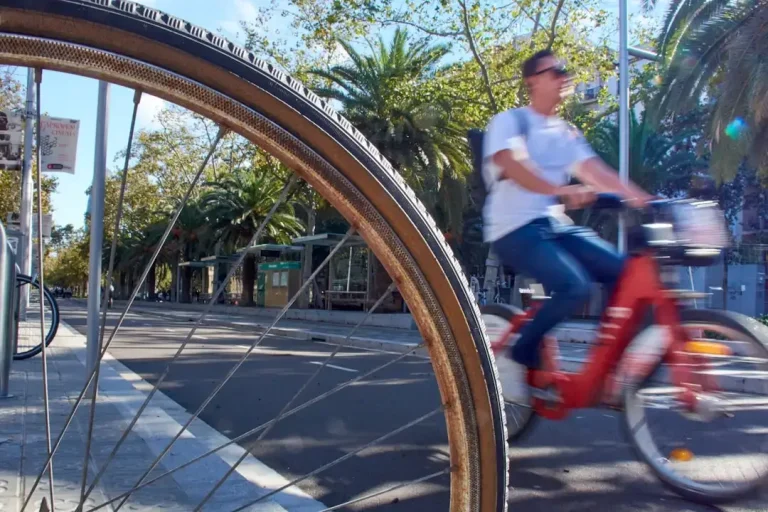
By the way, being eco rarely involves sacrifices – usually, it simply opens the door to a more comfortable and peaceful life. When we stop wasting food or more often choose a bike instead of a car for short trips, we win triply. We reduce our environmental footprint, take care of our own health, and leave some extra cash in our wallets along the way. Besides, don’t lower electricity and water bills sound like a pretty nice bonus to cleaner air?
- Lowering personal expenses: Lower energy and water consumption, as well as smart food management, simply mean more savings in the household budget.
- Environmental protection for future generations: By limiting single-use items and taking care of waste sorting, we genuinely relieve local municipal systems and the planet.
- Improvement of health and well-being: Fresher air thanks to reduced urban exhaust fumes and better quality food give us plenty of natural energy every day.
- Mitigating climate change: Even the smallest, repetitive purchasing decisions of thousands of people send a clear signal to the market, changing global production standards.
Pillars of Conscious Living: How to Introduce Eco Habits Without a Revolution?
Seriously, being more ecological does not require turning your entire life upside down in a single weekend. We feel that people online often scare us with the vision of an immediate switch to zero waste mode, which can be slightly overwhelming. That is completely the wrong path! Instead of radical steps, it is better to focus on small, repetitive habits that over time simply become our everyday reality. Ultimately, the point is to make our lives more comfortable and, incidentally, a little friendlier to the environment.
It is worth looking at daily choices through the prism of several main areas. After all, our care for the planet is distributed across ordinary, mundane activities – from brewing morning coffee, through shopping, all the way to the commute to the office. According to reports from the European Environment Agency (EEA) or the Organisation for Economic Co-operation and Development (OECD), our household energy bills and daily waste generation have a real impact on the state of our planet. Want to know where to start? Let’s break it down into factors!

Four Pillars of Daily Care for the Planet
Dividing eco-actions into specific spheres of life makes it easier to grasp the topic without unnecessary stress. See what these small changes can look like quite naturally:
- Home: This is our most important base. According to EEA data, buildings in the European Union consume massive amounts of energy, which is why simply replacing light bulbs with LEDs, turning off lights, or doing full laundry loads makes a difference. Added to this is turning off the tap while brushing teeth and smarter heat management.
- Shopping: The FAO reminds us how gigantic a problem food waste is – it is estimated that we waste as much as a third of the food produced! Therefore, meal planning, making a shopping list, and buying loose products into reusable bags is a bullseye. What about clothes? The textile sector leaves a significant carbon footprint, as the Ellen MacArthur Foundation often reminds us, so repairing clothes and visiting second-hand shops is pure savings and care rolled into one.
- Travel: We don’t have to switch to a bike at every turn right away, especially in winter. It’s more about common sense – choosing public transport or carpooling when possible, and opting for trains instead of planes more often on shorter routes.
- Work: Office routine also hides potential. Digital document flow, less frequent printing, making sure not to leave equipment in standby mode, or even remote working (where management allows it) help limit our shared environmental footprint.
Practical Examples: What Does It Look Like in Reality?
Theory is theory, but how do you translate all of this into an ordinary, busy Monday? Seriously, an ecological life does not require abandoning civilization or making homemade soap from ashes. We feel that the whole secret lies in small, repetitive habits that simply become second nature. According to EU data, households can generate a mountain of food waste (as the European Environment Agency EEA reminds us), but it is easy to tame with a few simple tricks. Let’s see what a typical day in the life of a person who likes to care for the planet without obsessing over it looks like.
From Store to Home Sanctuary: Small Decisions with Great Power
Everything starts, of course, before leaving the house. Instead of running around markets without rhyme or reason, we make a short shopping list based on a meal plan for the next few days. Thanks to this, only what we will actually eat lands in the cart – and as the UNEP environment program states, food waste is a gigantic global problem that is easy to control right at the checkout.
- At the store: We reach for loose vegetables and fruit, throwing them into a previously prepared reusable mesh bag. Bulk products, such as groats or rice, are chosen in larger packages or by weight, widely bypassing single-use plastic bags.
- At the checkout and on the go: Instead of buying water in small bottles, we carry a refillable water bottle with us, and we pour coffee on our way to work into our own thermal mug.
- In the kitchen: Upon returning, we do a quick “fridge audit”. Yogurt with an expiring shelf life lands at the front of the shelf to be eaten first, and the excess cooked rice is frozen without hesitation.
- In the bathroom and laundry: Instead of long baths, we choose a shower, turn off the water while brushing our teeth, and only run the washing machine when the basket is full, setting the temperature to 30°C. The US EPA calculates that such minor savings can save thousands of liters of water annually!
- On the road: We combine errands – pharmacy, parcel locker, and bakery all in one trip out of the house, and we cover short distances on foot or by jumping on a bike.
You’ll probably agree that this is no sacrifice at all? One small step is enough to make everyday life a little friendlier for all of us.
Frequently Asked Questions (FAQ)
What is the difference between an ‘eco’ and a ‘zero waste’ lifestyle?
Being “eco” is a broad concept encompassing sustainable development, conscious consumer decision-making, and the conservation of natural resources and energy. In contrast, “zero waste” is a more rigorous philosophy whose main goal is the complete elimination of waste generation and striving to ensure nothing ends up in landfills.
Who typically implements ecological practices into their life?
Ecological habits are gaining popularity across various groups. They are implemented by:
- Conscious consumers who care about health protection and household budget optimization.
- Enterprises aiming to reduce emissions and operational costs.
- Public institutions and organizations implementing sustainable development goals.
What is the opposite of an ecological lifestyle?
The opposite of ecology is mindless consumerism and the linear economy based on it. This model relies on excessive production, mass manufacturing of single-use products, and a complete disregard for the real impact of daily choices on the natural environment.