Table of Contents
A wind turbine is an installation that converts the kinetic energy of the wind into electrical energy using the aerodynamic movement of rotor blades and a generator. In the face of rising energy costs and the need to reduce carbon dioxide emissions, wind farms have become a key pillar of renewable energy sources.
What is a wind turbine and why does it matter?
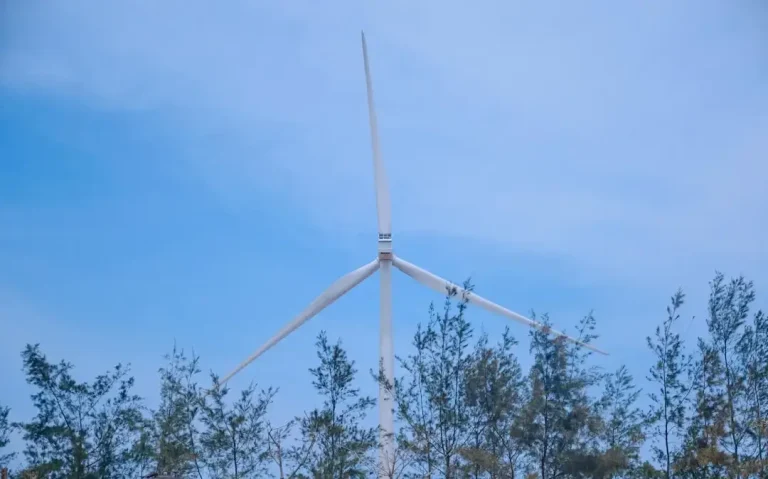
A wind turbine is an installation consisting of one or more turbines that convert the kinetic energy of the wind into electrical energy. The wind sets the blades and rotor in motion, the built-in generator produces electricity, and the transformer station efficiently connects the entire structure to the grid. Best of all, during operation, the device burns no fuels and generates no troublesome emissions from combustion processes. Seriously, can you imagine a cleaner way to generate electricity?
By the way, the history of this technology is not nearly as young as it might seem! It dates back to the 19th century and the pioneering designs of Charles F. Brush. Today, however, we are in a completely different place. Global installed capacity has already crossed the one-terawatt threshold, as clearly shown by the latest reports from the Global Wind Energy Council. This is no longer a charming technological novelty, but a powerful pillar of our energy future.

How wind is changing the Polish landscape and energy mix
We have the impression that wind has really spread its wings in Poland in recent years. The Polish Wind Energy Association indicates that onshore installations are already supplying us with substantial amounts of clean kilowatt-hours. Besides, did you know that a single modern wind turbine can power about 1,500 households annually with minimal CO2 emissions? That is impressive, right? And this is only the beginning of our national wind adventure.
Let’s look at the Polish sea. Government plans for offshore wind energy assume reaching as much as 11 GW of capacity by 2040. Flagship initiatives, such as the Baltic Power project carried out by ORLEN and Northland Power, show that offshore wind is becoming our present. The International Energy Agency rightly notes that transformation must go hand in hand with system flexibility. But the ecological benefits are indisputable. According to data from the Intergovernmental Panel on Climate Change (IPCC), wind has a manifold lower carbon footprint over its entire life cycle than coal or gas. Additionally, according to the EIA, the towers themselves occupy a fraction of the farm’s terrain – the rest can easily serve farmers. And that is the ideal partnership!
Key elements and operating principle of a wind turbine
Seriously, turning invisible wind into electricity flowing in our sockets sounds a bit like magic, but smart engineering is simply behind this process! Everything starts with a gust hitting the rotor blades. We feel like these are ordinary propellers, but their profile resembles an airplane wing. Due to the pressure difference on both sides of the blade, lift is created, which sets the rotor into rotational motion. According to data published in materials by naukoportal.pl, this dance with the wind is based on several extremely precise technical steps.
- Capturing wind energy: the air stream flows onto the profiled blades, triggering lift and torque.
- Rotor movement: the slow rotation of the rotor is transferred to the low-speed shaft, giving rise to the entire mechanical process.
- Increasing rotational speed: in classic models, the gearbox accelerates the movement right before the generator, although modern direct-drive turbines manage without this element.
- Electricity generation: the generator converts the mechanical energy of rotation into clean electrical energy.
- Grid matching: advanced electronics take care of the current parameters, and the transformer increases the voltage so that energy does not escape during long cable journeys.
- Grid integration: the electricity goes to the transformer station and from there straight to the national power system.
- Safety and control: control systems turn the nacelle toward the wind and regulate the blade pitch angle, ensuring that a gale does not harm the entire structure.
Turbine performance parameters
Well then, how do we actually know if a given turbine is operating efficiently? Specialists from the American National Renewable Energy Laboratory (NREL) and the EIA regularly analyze statistics that help assess the potential of wind power plants. We are dealing with several key concepts here that are worth knowing on a daily basis.
First of all, we look at the cut-in speed, i.e., the so-called cut-in. This is the moment when the wind reaches usually about 3–5 m/s, and the turbine actually starts spinning and producing energy. In turn, the rated speed allows you to squeeze the absolute maximum out of the machine. And what happens when the weather starts going wild? At the cut-out speed (cut-out), which is usually about 25 m/s, or close to 90 km/h, the turbine safely brakes and waits for better times.
It is also worth taking a look at the capacity factor (capacity factor, CF). It shows the ratio of actually produced energy to that which the machine would generate if it worked around the clock at full speed. According to the EIA, the average factor for turbines in the USA oscillates around 38.5%. Knowing this indicator and the rated power, we can easily calculate the annual energy production (AEP) – by multiplying power, time, and our factor! Although wind forecasts can be fickle, because the final result always depends on the whims of the local weather and terrain relief!
Main types of wind turbines
Wind can surprise with its strength, but even more surprising is how cleverly we manage to tame that strength. Seriously, wind technology has come a huge way from simple windmills grinding grain to giant structures producing clean energy. When we look at the energy map of the world, we will quickly notice that there is no single universal solution. After all, we have horizontal axis (HAWT) and vertical axis (VAWT) turbines, as well as small domestic installations and powerful offshore farms, which undoubtedly also includes Polish projects developing in the Baltic Sea. According to International Energy Agency analyses, this diversity allows the technology to be adapted to almost any terrain conditions.
Before we move on to the details, let’s take a quick summary that will help us grasp these differences in the blink of an eye.
| Turbine type | Axis orientation | Main advantages | Main disadvantages |
|---|---|---|---|
| HAWT | Horizontal | High efficiency, mature technology, great for commercial farms. | Requires yaw mechanism, more difficult nacelle service. |
| VAWT | Vertical | Operation in wind from any direction, lower height, easier urban installation. | More difficult scalability, lower commercial efficiency, dynamic loads. |
Construction and location of wind turbines
Choosing the right type of turbine is a bit like choosing boots for the mountains – everything depends on where we intend to hike. Standard horizontal axis turbines (HAWT) are the kings of large wind farms. Their giant rotors reach dizzying sizes, and industry sources, such as energy analysis portals energia.biz.pl, indicate that in modern offshore installations, the rotor diameter can even approach 250 meters! In turn, the vertical axis construction (VAWT) works regardless of which side the wind blows from, making it a charming and interesting solution for smaller applications, although according to Windpower Engineering data, it is more difficult to scale up to large commercial projects.
We also cannot forget about the division into onshore and offshore. While land installations are cheaper and simpler in daily maintenance, wind at sea is much stronger and more stable. The Global Wind Energy Council regularly emphasizes that offshore wind farms are the future of energy transformation. We have the impression that the view of powerful marine giants rising from the waves of the ocean or the Baltic makes an impression on everyone who has seen it with their own eyes at least once.
Examples of application and development of wind energy in Poland
Who would have thought that so much time has passed since the erection of our home-grown, first wind turbine? We started cautiously in 1991, and today we are looking at a completely different reality. Poland has already passed the threshold of 11 GW of wind capacity, and powerful onshore farms as well as the newly born giants in the Baltic Sea are realistically changing the country’s energy landscape. Seriously, the scale of these investments can make an impression. We are just transitioning from loose visions and drawings on paper to hard market realities, where wind is no longer just a novelty, but the foundation of the energy mix.
Theory is theory, but in practice, the Polish wind backyard is facing quite significant challenges. We have the impression that purely technical and administrative issues echo the loudest. On the one hand, there is a powerful appetite for clean energy here, and on the other hand, we have a grid barrier – as brief.pl reports, the number of grid connection refusals has reached nearly five thousand, and frozen capacity exceeds a hundred gigawatts. Added to this are legislative intricacies, including the still-living echoes of distance restrictions that heavily hold back the development of new onshore locations.
From major onshore projects to Baltic offshore and future challenges
Industry development is a game on several very demanding fronts today. Let’s look at Polish offshore – according to smartgrid.org.pl analyses, the potential of the Baltic Sea is estimated at an impressive 28–33 GW. Sounds great, but behind these figures are years of preparations, billion-dollar budgets, and giant investments in the modernization of transmission and port infrastructure. In turn, analysts from Baker Tilly TPA point out that the profitability of wind projects strictly adheres to mathematics – a model onshore farm must carefully calculate costs because LCOE and IRR indicators are sensitive to every change in the market environment.
- Economic and financial challenges: High cost of capital, expensive investments in offshore farms, and risks associated with energy price volatility and connection conditions force precise planning.
- Legislative and grid barriers: Legal amendments force rigorous compliance with so-called milestones in connection agreements, which weeds out less advanced projects.
- The green tail, i.e., turbine recycling: Steel towers or machine elements are easy to reuse, but composite blades are a completely different story. Although Poland still lacks precise national data, European WindEurope reports sound the alarm that the mountain of used blades will grow year by year. The industry must therefore already seek smart solutions in the spirit of a circular economy before the problem grows to the rank of a giant challenge.
Frequently Asked Questions (FAQ)
What is the difference between a wind power plant and a photovoltaic farm?
The main differences lie in the energy generation profile and weather conditions necessary for the operation of both installations. Photovoltaic farms produce electricity during the day, with the peak attributed to midday hours, while their efficiency drops drastically on cloudy days and in winter. Wind power plants are characterized by greater daily variability, but often higher production in the autumn-winter season when wind speeds increase. From the perspective of investment profitability, hybridization, i.e., combining both technologies to stabilize the energy supply stream and optimize balancing costs, is becoming the optimal market model.
Who usually invests in wind power plants?
The market for investments in wind energy is dominated by entities with large capital and experience in regulatory risk management. In the investor structure, we distinguish:
- Energy corporations (utilities): carrying out both onshore projects and powerful offshore investments, which they use to transform their energy mix.
- Investment funds and private equity: seeking stable, long-term assets generating predictable cash flows (often secured by Contracts for Difference CfD or PPA agreements).
- Large industrial consortia: investing directly in their own RES sources to secure supplies of cheap energy for energy-intensive sectors of the economy.
What is the opposite of a RES-based wind power plant?
The opposite of wind power plants are conventional fossil fuel-based generation sources, such as coal-fired power plants (hard coal and lignite) and gas-fired plants. Unlike emission-neutral windmills, which use the power of nature and do not emit carbon dioxide during operation, conventional units burn coal or gas. This generates high CO2 emissions and makes energy production dependent on the costs of purchasing raw materials and EU ETS emission allowances.