Table of Contents
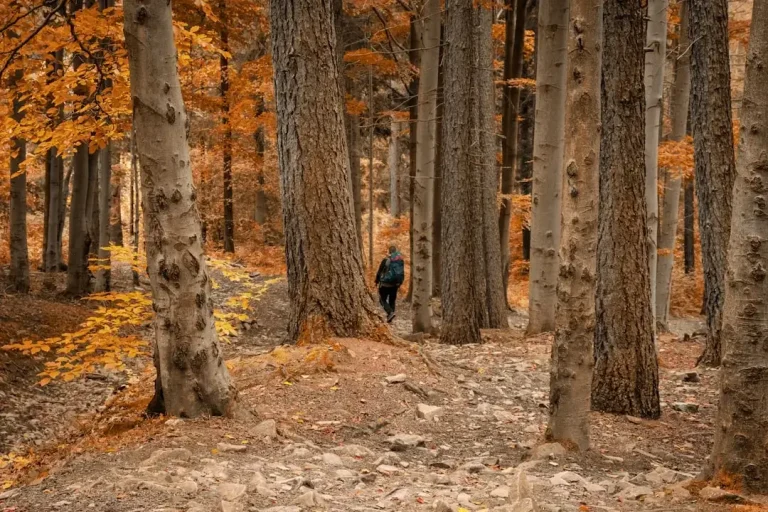
Forests are not only the green lungs of our country, but a key element of ecological security and the economy. Although Poland has undergone a huge metamorphosis in terms of forest cover since 1945, we are still striving for the ambitious goals set by state programs. In this article, we explain what the current structure of Polish forests looks like and what you need to know about their future.
What is forest cover and what is it in Poland?
Forest cover in Poland is an indicator determining the ratio of the area covered by forests to the total area of the country, which currently stands at 29.6%. This means that forests occupy nearly 9.3 million hectares, putting Poland at the forefront of European countries in terms of forest area. You’ll admit that’s a pretty good result, right? We have the impression that while walking through our woods, we rarely think about their “ownership,” and that is an interesting topic. Most of these areas, as much as about 82%, are public forests managed by the State Forests (Lasy Państwowe). The rest are mainly private groves belonging to individuals. Seriously, every third square meter of our country is a green space ready for your next trip.

While 29.6% sounds solid, the appetite grows with eating. According to GUS data and the assumptions of the National Program for Increasing Forest Cover, Poland aims to reach a level of 33% by 2050. Will it succeed? It seems so, considering that foresters plant millions of new trees every year. Where are the most forests? The undisputed king is the Lubusz Voivodeship, where green crowns cover almost half of the region. On the other end, we have central Poland, for example, the Lodz region, where shade can be a bit harder to find.
From just 21% to a green powerhouse – the short path of our forests
By the way, did you know that after World War II, our country looked completely different? In 1945, Poland was practically “shaved” of trees – forest cover at that time was only 21% (and some sources, such as archival records, even speak of 20.8%). Imagine this jump: within a few decades, we regained huge swathes of land for nature. This shows that wise land management really brings results, without unnecessary self-flagellation for past mistakes.
- 1945: only approx. 21% of the country’s area was occupied by forests.
- Currently: we are approaching the magic threshold of 30%.
- Goal: reaching 33% forest cover by 2050.
How do we compare to our neighbors? Although we are far from the Scandinavian record holders, such as Finland (73%), compared to the Netherlands (about 14%), we can feel like true forest potentates. WWF reports and data from the Ministry of Climate and Environment confirm that wood resources in Poland are constantly growing. It’s not just about statistics, but about the fact that we have somewhere to breathe deeply. And let’s face it – the sight of a dense, green wall of forest is probably the best therapy after a hard week at the office.
Why is the forest cover rate so important for the environment?
Have you ever wondered why forest cover indicators appear in almost every report on the state of the environment? It’s no accident. Forests are our powerful ally in caring for ecological security, and their presence translates directly into the quality of life we feel every day. We have the impression that we often forget that trees are not just a picturesque landscape, but above all a brilliant machine for stabilizing the conditions prevailing on Earth. By the way, did you know that a dense network of roots can retain up to 90% of rainwater? Thanks to this, instead of violent surface runoff that destroys everything in its path, we have peaceful filtration and replenishment of groundwater.
Forests act as a giant green buffer. As experts from WWF Poland emphasize, stands of trees act like natural air conditioning, but that’s just the beginning of their merits. Increasing the forest area is a real chance for effective erosion control and improving the structure of the land on which we live. Whether in the mountains, where soils are shallow and prone to landslides, or in the lowlands, where the wind can blow away the most valuable minerals – forests stand guard over the stability of the substrate. Seriously, without their support, our agriculture and water management would have a much tougher nut to crack.
Foundations of security: filtration, soil, and carbon absorption
When we talk about the specific benefits of high forest cover, mechanisms that are invisible to the naked eye but save our health come to the fore. According to data from the Polish Forest Society and GUS, increasing forest area is the way to restore balance in ecosystems that have been over-exploited for decades. Forests are our lungs, but also our kidneys – they filter what we have released into the atmosphere and water.
- Natural air filtration: Trees are champions at neutralizing pollutants. They capture particulate matter, heavy metals (such as lead or cadmium), and industrial gases (SO2 and NO2). The Nature Foundation indicates that in forested areas, air quality can be up to 30% higher than in urbanized areas.
- Protection and improvement of soil quality: Root systems keep soil particles in check, preventing wind and water erosion. In turn, falling leaves and needles create fertile humus, regenerating exhausted lands.
- Carbon absorption: This is probably the hottest topic in the context of climate regulation. Polish forest soils store as much as 57% of organic carbon, which makes them a giant CO2 warehouse and slows down the greenhouse effect.
- Oasis of biodiversity: Forests are home. The larger and more compact the forest complex (over 500-1000 ha), the more space there is for wildlife. It is estimated that the number of animals and plants in such areas is 20–30% higher than in open fields, allowing endangered species like woodpeckers or wolves to survive.
Looking at data from the Forest Data Bank, it is clearly visible that more than half of the forests in Poland are protective in nature. This is great news! It means that we are increasingly recognizing their fundamental role in climate regulation, and not just treating them as a source of raw material. Every hectare of new afforestation is simply a cleaner breath for all of us.
Key characteristics of Polish timber stands
When we walk through the forest, we rarely think about how much it has changed over the last decades. And the changes are truly impressive! Our forests are becoming more mature and more sustainable. The average age of a forest stand is currently about 62 years, which means that Polish nature is quite stable and slowly gaining strength. Data from the Large-Scale Forest Inventory (WISL) clearly show that we are moving away from post-war patterns, focusing on the naturalness and resilience of ecosystems.
We are particularly pleased that the landscape is becoming more varied. Although coniferous forests still account for about half of the area (approx. 49-51%), deciduous trees such as oaks, beeches, or birches are boldly reclaiming their place. This is great news for biodiversity! To better illustrate this metamorphosis, we have prepared a small comparison that shows how far we have come since 1945.
| Stand characteristic | State in 1945 | State currently (approx. 2024) |
|---|---|---|
| Share of deciduous trees | approx. 13% | approx. 31-32% |
| Average age of the forest | approx. 44 years | approx. 62 years |
| Area of stands 80+ years old | 0.9 million ha | 2.3 million ha |
Dominance of the Scots pine
It cannot be denied – the Scots pine is the true queen of our forests. It occupies about 60-61% of the forest area managed by the State Forests. Where did such popularity come from? It’s not just a matter of fashion from the past, but above all the incredible endurance of this species. The pine can handle weak, sandy soils perfectly, where other trees could only dream of survival. Our lowland areas are ideal for it.

By the way, the dominance of pine also has a historical background. After the war, we needed fast-growing raw material, which resulted in planting huge coniferous monocultures. Today we know that diversity is better, but the pine with its characteristic orange-brown bark will always remain a symbol of the Polish landscape. Seriously, is there anything more soothing than the smell of pine needles on a hot day? Probably not!
Increasing biological diversity
We have the impression that Polish forests are now undergoing their best metamorphosis. We are moving away from boring “production line forests” towards complex, multi-species ecosystems. The share of deciduous trees – such as oak, beech, or alder – has increased since post-war times from just 13% to over 30%. That’s a huge jump! Thanks to this, forests are not only prettier but, above all, more resistant to pests and climate change.
Foresters are increasingly matching species to the natural habitat, rather than forcing nature to cooperate. Such a species mix is a paradise for animals – according to data published by the State Forests, as many as 65% of animal species in Poland find a home among the trees. It looks like we are heading in a really good direction, and our forests are becoming richer and simply more interesting to explore every year.
The future of Polish forests: Goal 2050
We have a truly ambitious vision ahead of us: to make every third square meter of Poland covered with forest by 2050. We are talking about the magic threshold of 33% forest cover, set by the National Program for Increasing Forest Cover. Is it even possible? Of course it is, although we have to work hard for it! According to data from the Ministry of Climate and Environment, we are currently oscillating around 29%, so we still have a significant piece of land to afforest – it’s a bit like wanting to “garnish” the map of Poland with additional millions of hectares of new greenery. By the way, it’s amazing how much such trees can change our microclimate.
Of course, the road to this goal is not paved only with pine cones. The main challenge foresters face is where to plant all these trees. Land isn’t made of rubber! We have a lot of marginal land where carrots won’t grow, but pine would feel at home. However, here we enter the territory of private owners, who own nearly 20% of Polish forests. And here a small friction appears: afforesting your own plot is a significant investment of time and money. Seriously, the cost of preparing a hectare for a forest is often even 15,000 PLN. Without specific financial incentives, it’s hard to expect every farmer to suddenly swap a plow for an oak seedling.

Goal 2050 – Challenges and Initiatives
No one has any doubt that technology is our greatest ally in the “Green Poland” mission. The State Forest National Forest Holding is already testing the “Forest 4.0” project, where drones sow seeds faster than we can brew coffee. Such gadgets can reduce planting costs by as much as 40%! Added to this are special EU subsidies (up to 185 EUR per hectare from the EAGGF fund) and programs from the Agency for Restructuring and Modernization of Agriculture, which help finance afforestation even by 100%. This is great news for those who have a piece of wasteland and want to do something good for the planet without going bankrupt.
What can we, as ordinary people, do about it? It turns out, quite a lot! If you plan to support Polish forestry, here are short “Next steps” for you:
- Support local actions: Initiatives like EKO GB or social tree-planting events are the easiest way to add your brick (or rather leaf) to the common goal.
- Choose certified wood: Products with the FSC or PEFC logo ensure that the forest they come from is treated with respect and renewed.
- Educate neighbors: If you know someone who has free marginal land, mention the “Afforested Farmer” program to them – ARiMR really has funds for it!
We have the impression that combining modern forest engineering with the private energy of landowners is the key to success. Although the Lodz region is still chasing the rest of the country with a score of 20.4% forest cover, with the current pace of innovation, those 33% in 2050 looks like a very realistic goal. After all, trees grow for all of us, right?
Frequently Asked Questions (FAQ)
What is the difference between afforestation and forest cover?
Although these concepts are related, they concern different aspects of forest management. Afforestation is a specific action consisting of establishing forest crops on lands that were not previously forests (e.g., on agricultural wastelands). In turn, forest cover is an objective statistical indicator that determines the percentage ratio of forest area to the total area of a given region, for example, the entire country.
Who manages most of the forests in Poland?
The main entity responsible for managing public forests in Poland is the State Forest National Forest Holding (Lasy Państwowe). This institution directly oversees about 82% of the total forest area in the country, taking care of sustainable management, nature protection, and making forests available to the public.
What is the average age of trees in Polish forests?
Currently, the average age of forest stands in Poland is about 62 years. It is worth emphasizing that this parameter shows a constant upward trend. The systematic increase in the average age of trees is clear evidence of the growing maturity and structural stability of our forest ecosystems.